Jewelry marketing and social media: what dopamine culture can teach the industry
From precious to postable
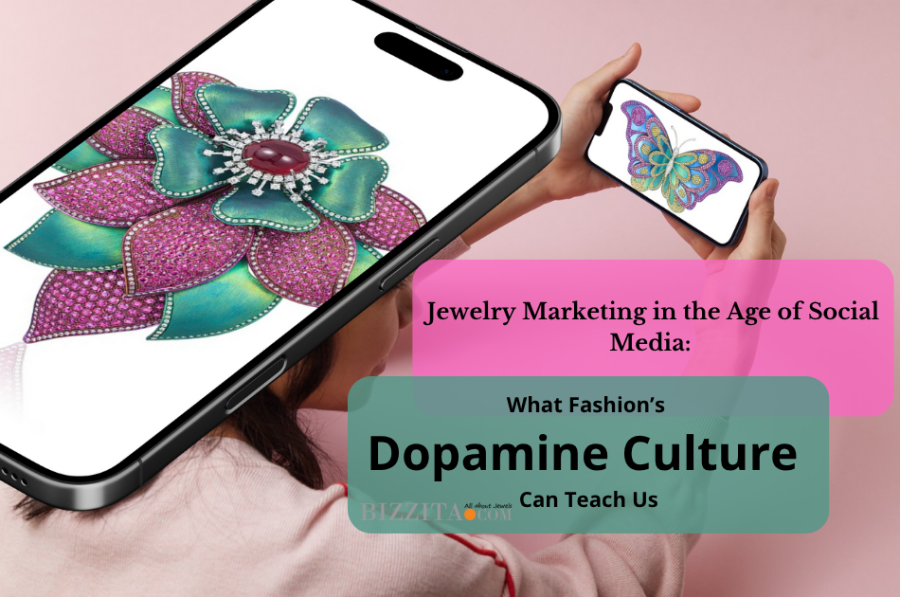
Jewelry once lived in a velvet box. Now it lives a double life: first as a scroll-stopping image, then as a luxury object. Once purchased, it returns to content again, shared in selfies, stories, and carefully staged moments.
This is not a bad development, but it changes the game. A product, as editor-in-chief Thom Bettridge of i-D put it, is basically content until someone buys it. For jewelry professionals, that means thinking in terms of storytelling across platforms, making every piece feel alive before, during, and after the sale.
Spectacle versus substance
Fashion has long leaned into performance: spray-on dresses, surreal runway stunts, and spectacle as a marketing instrument. Jewelry is less theatrical by nature, but the rise of gemstone ASMR videos, casting reels, and "making of" content shows the category is not immune. The question is not whether to engage with visual culture, but how to do it without hollowing out what makes jewelry worth the attention in the first place.
The challenge is crafting content that grabs attention and builds genuine connection, not just a spike in views.
The speed of relevance
Algorithms have trained consumers to expect fresh visuals, fast reactions, and novelty. One week it is "mob wife" glam, the next it is "coastal grandmother" pearls. Unlike fast fashion, jewelry has deeper roots: it is slower, richer, and built to last. That tension is worth leaning into rather than running from.
A few approaches that work within this dynamic:
- Anchor pieces in moods and stories, not just trends
- Create limited drops or recurring editorial formats such as a monthly muse
- Offer visual refreshers without overproducing
The pressure to perform
Social media has made visibility a survival strategy, particularly for independent jewelers. The pressure to post consistently can feel relentless: one co-founder of a fashion brand described the anxiety of going quiet for even a single day.
What makes this manageable is rhythm, not volume. Batch-creating content and scheduling it weekly, building around consistent content pillars such as "Stone of the Week" or "From Bench to Beauty," and repurposing a single blog post into multiple pieces of platform-specific content all reduce the weight without reducing the presence.
From likes to loyalty
Likes are visible, but they do not build legacy. Robert Triefus, CEO of Stone Island, made the point plainly: the engagement social media generates is often superficial and momentary, and does not reflect what actually matters in the long run.
Jewelry sticks. In memories, in milestones, in stories passed between generations. The opportunity is to move from attention to affection: sharing values alongside visuals, inviting audiences into the process, and creating space for slower content, longer captions, letters, and storytelling that does not expire in 24 hours.
Slow gold in a fast world
The lesson from dopamine culture is not to copy fashion's pace. It is to understand the current and decide how to move through it without losing what makes jewelry distinct.
In a world of fast content and faster forgetting, jewelry is one of the few categories that genuinely does not have to chase the next click. The brands that understand this, and communicate it well, are the ones that will still mean something when the buzz fades.
This article was inspired by Marc Bain's piece "How Dopamine Culture Rewired Fashion" for Business of Fashion, published July 2025.